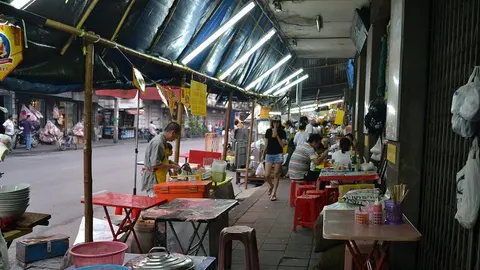

Cha-am suits a beach-and-seafood escape more than a packed sightseeing circuit. For a day trip, keep the plan to the waterfront and one additional stop; for a relaxed break from Bangkok, an overnight is the better use of the journey. Do not confuse a resort with a Cha-am address with accommodation in the beach town itself. 1
The tourism authority places Cha-am in Phetchaburi province, north of Hua Hin, and identifies its long beach and fishing community as central attractions. That makes it a different proposition from staying in Hua Hin and merely visiting another stretch of sand. 1
Start with the beach town, not a long attraction list
For a first visit, use the beach as the centre of the day. Choose a place to eat, walk along the waterfront and leave time to sit rather than trying to turn every hour into a paid activity. Cha-am's appeal does not require an elaborate itinerary.
The northern fishing harbour provides a second focus. Tourism Authority of Thailand information identifies the fishing village, boats and seafood restaurants there. It is a useful change from the main beach frontage, especially when lunch is as important as swimming. 1
Keep expectations specific. A beach outing, a harbour meal and a palace visit have different requirements for clothing, transport and timing. Carrying wet swimwear into a cultural stop is avoidable if you decide the sequence before leaving.
For swimming, follow the conditions and instructions at the beach on the day. A destination described as family-friendly is not a guarantee about waves, weather or supervision. Choose a comfortable stretch and keep any boat or watersports activity separate from the area where you intend to swim.
Do not rent equipment before agreeing on the full price and return time. Ask whether a quoted beach-seat charge is per chair, per group or tied to a food order. Clear terms are more useful than assuming every vendor works in the same way.
Mrigadayavan Palace: worthwhile, but verify the visit itself
Mrigadayavan Palace is a logical cultural addition to a Cha-am stay. The tourism authority includes it among nearby attractions, while UNDP's reporting provides a more interesting reason to visit than architecture alone: the site has been addressing coastal erosion through nature-based conservation measures. 12
That connection changes how to look at the grounds. The shoreline is part of the story, not merely a background for photographs. The palace foundation's conservation work offers a way to connect the historic setting with the environmental pressures affecting it. 2
However, a conservation article does not establish current public access to every building. The palace's own website could not be retrieved during this research, and secondary listings disagree about precise hours. Treat the visit as conditional on confirmation from the palace rather than publishing an unverified timetable.
Confirm which areas are open, whether any restoration affects the route, the admission charge and the clothing requirements. A reopened site can still have restricted interiors or a different visitor route. Do not assume that all images in older guides show areas accessible on your date.
For a short outing, put the palace first only after confirming its admission arrangements. If it is unavailable, replace it with more time on the coast rather than adding a distant attraction simply to preserve an ambitious itinerary.
Make seafood lunch the main reservation
Cha-am's fishing-community setting makes a seafood meal a sensible centrepiece. The official tourism directory lists Krua Met Sai as a local restaurant option. That is a useful starting point for locating a venue, not independent evidence that every dish is exceptional or that a historical menu remains current. 3
At any seafood restaurant, distinguish a fixed-price dish from seafood charged by weight. Before ordering a whole fish, crab or prawns, ask for the weight, the unit price and whether preparation adds another charge. This prevents the final bill from depending on assumptions.
For a shared meal, my recommendation is to order one main seafood dish, a vegetable dish and rice first, then add more if needed. It is easier to enjoy the meal without waste than to order several large items before seeing the portions.
Choose the preparation as deliberately as the ingredient. Ask whether a sauce is spicy, whether shellfish are used in the seasoning and whether dietary requirements can actually be accommodated. Do not assume that a vegetable dish is suitable for a particular diet without discussing the stock and sauces.
For a waterfront table, confirm whether you are booking the restaurant itself or a particular seating area. A sea-facing venue does not mean every table has the same view, shade or shelter.
Getting there: confirm the actual station and last leg
A private transfer is straightforward to organise when you want a palace stop and a specific restaurant, but request a return quotation that includes waiting time and all agreed stops. A one-way price to Cha-am is not a day-trip package.
For rail travel, inspect the actual service rather than using "Bangkok station" as the origin. Independent transport coverage shows that Cha-am rail journeys can involve different Bangkok terminals and train types. The station in Cha-am is also separate from the beachfront, so budget for the last leg. 4
Use State Railway of Thailand's D-Ticket system for services available online. Importantly, its published conditions say ordinary, suburban and local trains cannot all be booked through that system. A missing online result therefore does not by itself prove that no train operates; ask SRT or the station about the service you need. 5
For a day trip, establish the return before committing to the outward journey. Compare the full door-to-door plan: hotel to terminal, rail journey, station to beach, and the same components in reverse. A low fare is not automatically the best choice when the timetable leaves little usable time at the destination.
Do not attach a fixed transfer duration to every hotel in the district. Send the driver the exact property pin, especially for resorts along the coast outside the central beach area.
A workable day and a better overnight
For a simple day, choose a confirmed morning cultural visit, seafood lunch and an unhurried afternoon at the beach. Reverse the first two elements when admission arrangements require it. Leave a clear margin before the return transport rather than making the last stop dependent on perfect traffic.
For an overnight, I would separate the experiences: arrive and settle into the beach area, eat seafood without watching the clock, then visit the palace or another confirmed attraction the following day. This is an editorial recommendation, not a claim that every traveller needs two days.
Choose central accommodation when you want to walk out for meals. Choose a more isolated resort when its pool, beach frontage and on-site facilities are the point of the trip. Before booking either, compare the exact map location with the places you intend to visit.
Cha-am works best when you allow the coast to set the pace. One good meal, a worthwhile cultural stop and time by the water can justify the journey. Adding more names to the itinerary does not necessarily improve it.