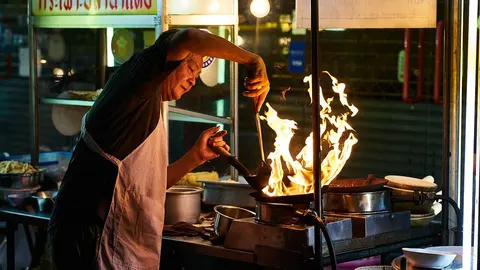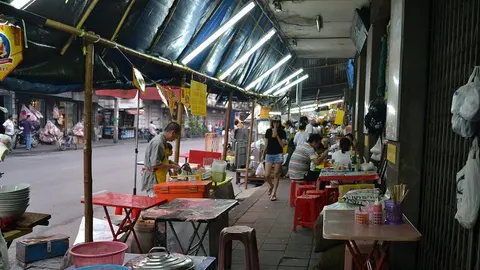
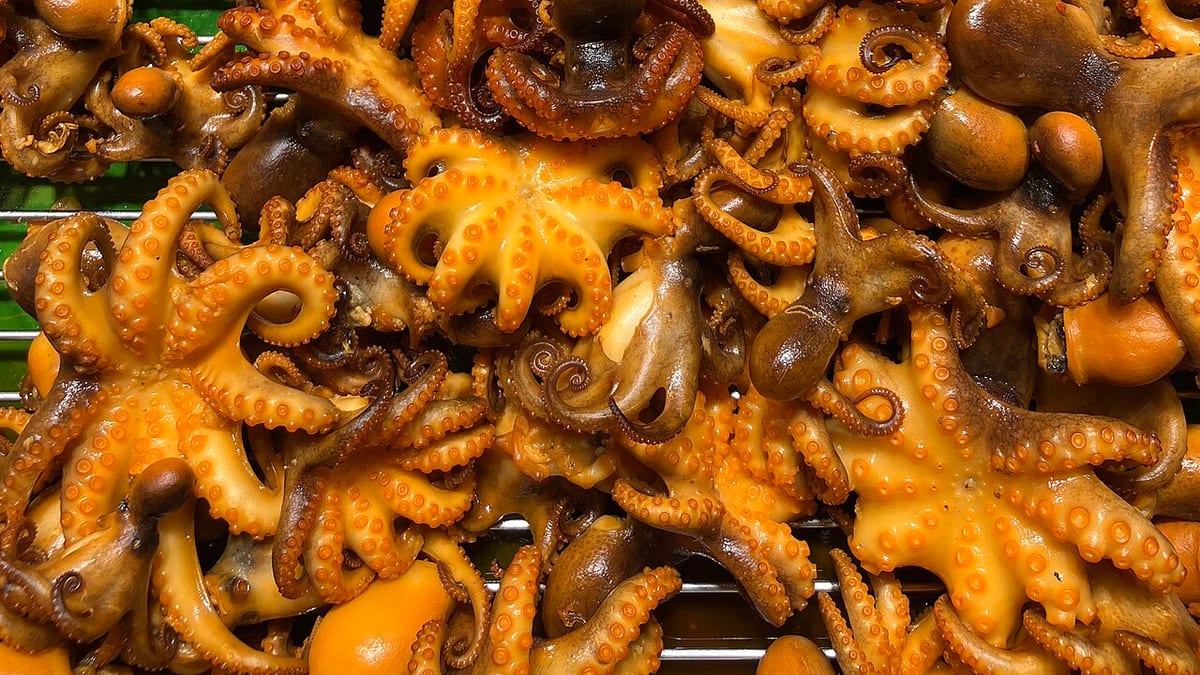
Bangkok food tours are worth it when you want help choosing unfamiliar dishes, understanding a neighbourhood and ordering confidently - not simply a cheap dinner. A small walking tour suits curious eaters; a tuk-tuk tour adds transport and sightseeing; a dedicated vegetarian route is a different product from a standard tour with a few dishes removed.
The strongest reason to pay is interpretation. A good booking should explain what you are eating and why the stops belong together. The number of tastings is secondary: fifteen small samples do not automatically create a better evening than a shorter route with more useful conversation.
Match the format to the evening you want
A Chef's Tour publishes a Chinatown walking experience with a maximum of eight guests, more than fifteen tastings and a duration of around three and a half to four hours. Its advertised starting price is US$59 per person, with bottled water included and a meeting point at Shanghai Mansion in Yaowarat. Those are the operator's published terms, not a live quote for a selected departure. [1]
That format suits someone who wants to move through one area on foot and try a broad menu. It is less suitable when a long walking session would be difficult or when you would rather have a leisurely seated dinner with a small number of dishes.
Bangkok Food Tours offers a different proposition through its Best Eats Midnight tour by tuk-tuk. Despite the name, its directory lists evening departures at 18:00, 18:30 and 19:00, not a midnight start. It also offers daytime routes in Bangrak and Thonburi, so there is no need to choose an evening product simply because it is the most conspicuous one in search results. [2]
For a first visit, choose a neighbourhood you genuinely want to understand. For a return visit, choose an unfamiliar area or a particular culinary theme rather than repeating the same broad "street food" introduction.
What the published prices do - and do not - tell you
At A Chef's Tour's advertised US$59 starting price, two adults would begin at US$118 before any transport to and from the meeting point. That is a calculation from the listing, not a claim about the price available on every date. The operator describes this as a meeting-point tour rather than hotel pickup. [1]
Bangkok Food Tours' Happy Veggies product is private, and its price changes with group size. The published table quotes THB 5,200 for one person, THB 2,900 per person for two or three, and THB 2,700 per person for four or five. Transfers to the meeting place and from the endpoint are excluded. [3]
For a couple, that means THB 5,800 for the listed private vegetarian experience. For four people, it means THB 10,800. The per-person reduction does not make the larger group's total cheaper; it changes how the private guiding and transport costs are shared.
These products should not be ranked by putting the dollar and baht figures side by side without a dated currency conversion. More importantly, one is a shared walking tour and the other a private tuk-tuk itinerary. They are not like-for-like offers.
When comparing quotes, separate food, guide, transport during the tour, drinks, hotel transfers and cancellation terms. A more expensive tour may include something you would otherwise buy separately - or something you do not need at all.
Dietary suitability comes before ratings
A highly rated general tour can be the wrong purchase when much of its menu is unsuitable. A Chef's Tour explicitly says its standard Bangkok experience is not suitable for vegetarians or vegans, is not halal-certified and cannot guarantee food free from allergen traces. It also advises against the tour for severe allergies. Do not replace those statements with a reassuring assumption that a guide will improvise. [1]
The Happy Veggies page is more specific than its vegetarian title: it states that its featured dishes exclude meat, seafood, dairy, eggs, honey and seafood-derived sauces. That makes it a more relevant starting point for a plant-based itinerary, while still leaving any individual allergy or cross-contact requirement to be discussed separately. [3]
Explain restrictions before payment, using the actual ingredient or preparation issue rather than a vague preference. Ask which dishes would be replaced, whether the substitute is equivalent and whether the operator can accommodate the requirement at every stop.
A vegetarian menu is not automatically suitable for someone with a soy, nut or other allergy. Similarly, removing pork does not make a tour halal. These are different requirements, and a booking should be selected according to the one that applies to you.
Group size, walking and timing change the value
Smaller groups can make questions and conversation easier, but a published maximum is not a promise of a private experience. Decide whether meeting other travellers is part of the appeal or whether you would rather pay for control over the pace.
For families, check the specific child policy and think about attention span as well as appetite. A discounted child's ticket is not useful when the route runs beyond bedtime or offers little that the child is comfortable eating. Ask about seating breaks, toilets and the distance between stops.
For anyone with limited mobility, "tuk-tuk tour" should not be read as "no walking." Ask about getting in and out of the vehicle, the surfaces between stops and the accessibility of the restaurants. The transport format alone does not answer those questions.
Schedule the experience so that it replaces a meal rather than competes with one. Do not book a large lunch immediately before an afternoon tasting programme. Keep the following meal flexible too; a generous tour can leave little appetite for a reservation made before you understood the itinerary.
Bangkok Food Tours' directory distinguishes join-in departures from private availability on some daytime routes. For example, its Bangrak listing gives Saturday for the shared tour while private tours are offered daily. A date appearing unavailable for one format does not necessarily mean the entire route is unavailable. [2]
When independent eating is the better choice
Go independently when your priority is controlling the budget, returning to a few known dishes or lingering at one place. You do not need to buy a tour to justify eating in Chinatown. A self-directed evening can be built around one main dish, a contrasting snack and dessert, with room to change plans when somewhere is busy.
The trade-off is that you take responsibility for choosing stops, ordering and understanding what is in the food. A translation app helps with communication but does not create the relationship with a vendor or the contextual explanation that a good guide can provide.
A cooking class is another alternative when you care more about technique than sampling. My Thai Cooking publishes vegetarian and vegan classes, illustrating the difference between learning to prepare a meal and touring several places to eat. Compare the activity you want, not just the amount of food included. [4]
My recommendation is to book one well-matched food tour early enough in the trip to use what you learn afterwards. Judge it by dietary fit, route, guide access and the complete price. Paying for confidence and understanding can be worthwhile; paying only because a listing promises the largest number of tastings is a much weaker reason.