For a first Bangkok visit using several parts of the city, start with accommodation near Asok/Sukhumvit or Sala Daeng/Silom, where BTS and MRT options meet. Choose Siam for BTS-focused shopping and entertainment, Phaya Thai for an airport-rail-oriented base, or Chinatown for a neighbourhood-led stay. The best hotel is near the right station entrance, not merely near a railway line. 12
A useful booking test is to map three journeys: arrival from the airport, your main sightseeing day and the return from an evening out. A location that performs well on all three is more valuable than one that wins a vague "most central" label.
Asok and Sukhumvit: strongest for mixed rail use
Asok on the BTS and Sukhumvit on the MRT form a useful interchange pair. Thailand's official rail guidance identifies the connection, making the area a sensible starting point for travellers whose plans span both networks. 1
The advantage is choice. You can build a day around the line that best serves the destination rather than beginning every outing with the same extra connection. This is especially useful when your itinerary combines modern shopping areas with Blue Line sightseeing.
The trade-off is the final approach. "Sukhumvit" describes a large area, not a single station entrance. A hotel with the district name in its address may be well down a side street. Inspect the actual walking route and ask whether the advertised shuttle has a schedule that suits you.
For a short stay, I would pay attention to direct pedestrian access before paying for a larger room farther away. Saving an awkward walk twice a day can matter more than a facility you rarely use.
Noise is another property-level question. A useful transport location can also be busy. Ask about room orientation and the specific building rather than assuming all hotels around an interchange have the same atmosphere.
Sala Daeng and Silom: a practical alternative
The Sala Daeng BTS–Silom MRT connection creates another strong mixed-network base. It can suit travellers who want a different balance of city activities while retaining access to both systems. 1
Evaluate the accommodation against the station you will use most. A hotel described as "Silom" may be convenient for one part of the district but not especially close to the interchange. The district name alone does not answer the transport question.
This area can work well when you expect an evening out and prefer a straightforward return. Still, a restaurant or bar being in the same broad district does not guarantee a short walk. Save the actual address and inspect the route.
For families or anyone with limited walking tolerance, prioritise a manageable pavement route over a claimed distance measured in a straight line. A few hundred metres involving difficult crossings can be less convenient than a slightly longer route with clear access.
Choose this base because its connections match the trip, not because it is interchangeable with Asok in every respect. Different destinations will favour different starting points.
Siam: useful when BTS journeys dominate
BTS identifies Siam as the interchange between its main lines. That makes it convenient for a holiday centred on destinations reached through the BTS network. 3
The limitation is equally important: a strong BTS location does not put the MRT at your hotel door. If much of your sightseeing is on the Blue Line, include the additional transfer in your comparison.
For a shopping-focused weekend, staying near Siam can reduce the number of separate outings and make it easy to return to the hotel between activities. For a temple-and-old-town itinerary, another base may offer a more direct pattern.
Do not select a hotel solely because a shopping complex advertises an elevated connection. Verify whether the link is open at the hours you need and whether it actually reaches the hotel entrance. A convenient daytime route may not be your late-night route.
A good choice here is a property whose specific entrance and walking access you understand. The word "Siam" on a listing is only the beginning of that check.
Phaya Thai and airport-oriented stays
An airport connection is particularly valuable for a short trip with inconvenient flight times or several flight-related journeys. Suvarnabhumi's Airport Rail Link is a separate service, so choose accommodation according to how that rail route fits the rest of the visit. 42
Phaya Thai is worth considering for travellers who want that airport-rail orientation alongside BTS access. But proximity to an airport connection does not guarantee that rail is available for a very early departure or very late arrival. Check the relevant operating times before treating it as the deciding benefit.
For someone staying several nights, the airport trip occurs far less often than sightseeing journeys. Avoid saving effort on one arrival at the cost of awkward transfers every day.
For a single overnight stay before a flight, the calculation reverses. An airport hotel or a base on the appropriate transport corridor can make more sense than choosing a fashionable central district.
Remember that Don Mueang and Suvarnabhumi use different rail connections. A hotel convenient for one airport is not automatically convenient for the other. 45
Chinatown and the riverside: choose the experience knowingly
The Blue Line's Wat Mangkon station makes Chinatown a realistic rail-based accommodation choice. BEM's station guide is the right starting point for checking the relationship between the station and your chosen property. 6
This can suit visitors who want evenings in the neighbourhood rather than returning there from another district. The trade-off is that trips to BTS-focused destinations may involve a change.
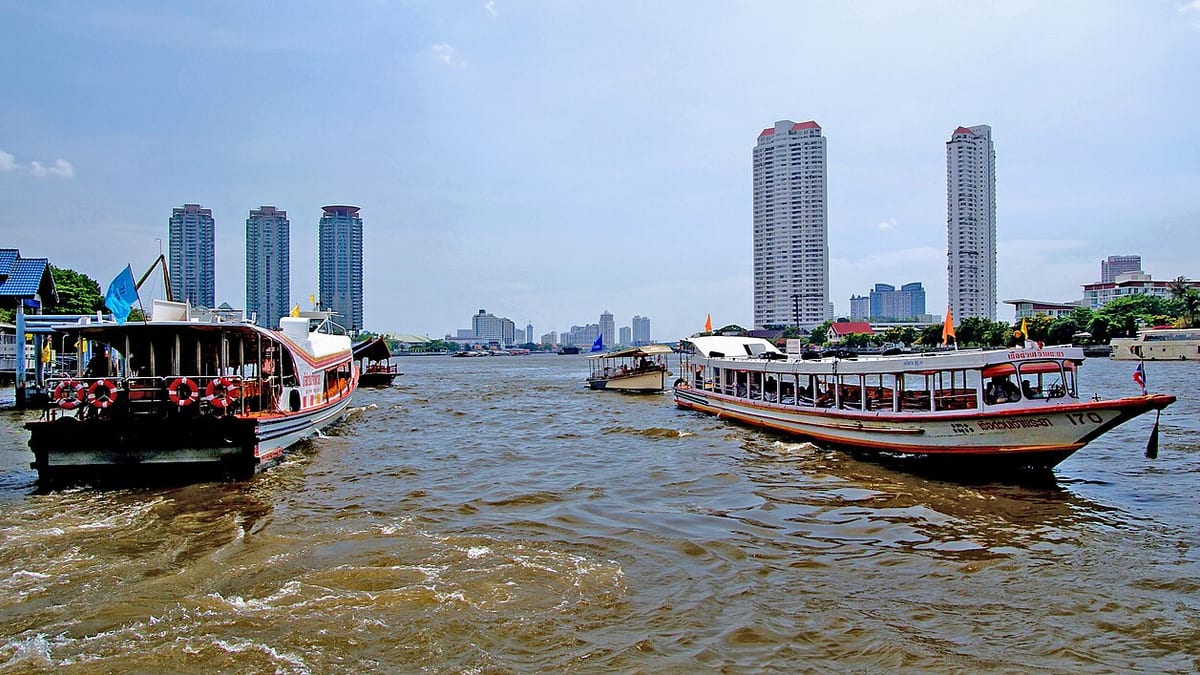
For a riverside base, distinguish three things: proximity to a public pier, a hotel's own shuttle boat and access to a railway station. They are separate services with separate hours. The tourist-boat operator lists Sathorn's connection with BTS Saphan Taksin, but that does not make every riverside hotel equally convenient. 7
A property's shuttle can be pleasant and useful, yet it introduces a timetable. Ask where it goes, how frequently it operates and what happens after the final service. A scenic arrival should not conceal a complicated late return.
Choose these bases for their particular setting and daily rhythm. Do not expect them to behave exactly like accommodation directly above a central interchange.
Compare the actual total cost
Suppose Hotel A costs THB 500 more per night but avoids two extra paid connections and a substantial walk each day. Whether it is better value depends on the fares, group size and how much you value the saved effort. There is no universal answer, but comparing only the room rate leaves out the decision's most important parts.
For a group, multiply individual transport costs. For someone travelling alone, a shared taxi calculation will not apply. For a family needing lifts or space for a stroller, the quality of the station approach may outweigh a small fare difference.
Check cancellation terms before paying more for transport convenience. A flexible hotel that lets you adjust after a flight change may be worth considering alongside location.
Before booking, ask the property for the nearest usable station exit, the normal walking route and any relevant access limitations. Compare that answer with the map. Specific information is more useful than a promotional claim such as "minutes from the BTS."
My default shortlist would begin at Asok/Sukhumvit and Sala Daeng/Silom, then change according to the trip. Pick the base that simplifies your repeated journeys, and choose the individual hotel only after checking the final walk. That is how "near public transport" becomes a genuine advantage rather than a line in a listing.