Museum of Contemporary Art Bangkok is worth visiting for travellers who want a sustained introduction to Thai modern and contemporary art, particularly imaginative and spiritually themed painting. It is less convenient as a spontaneous stop between central-city sights. Allow time for the journey, and budget from the dedicated admission page rather than its contradictory FAQ. [1][2][3]
Go for the collection, not just the name
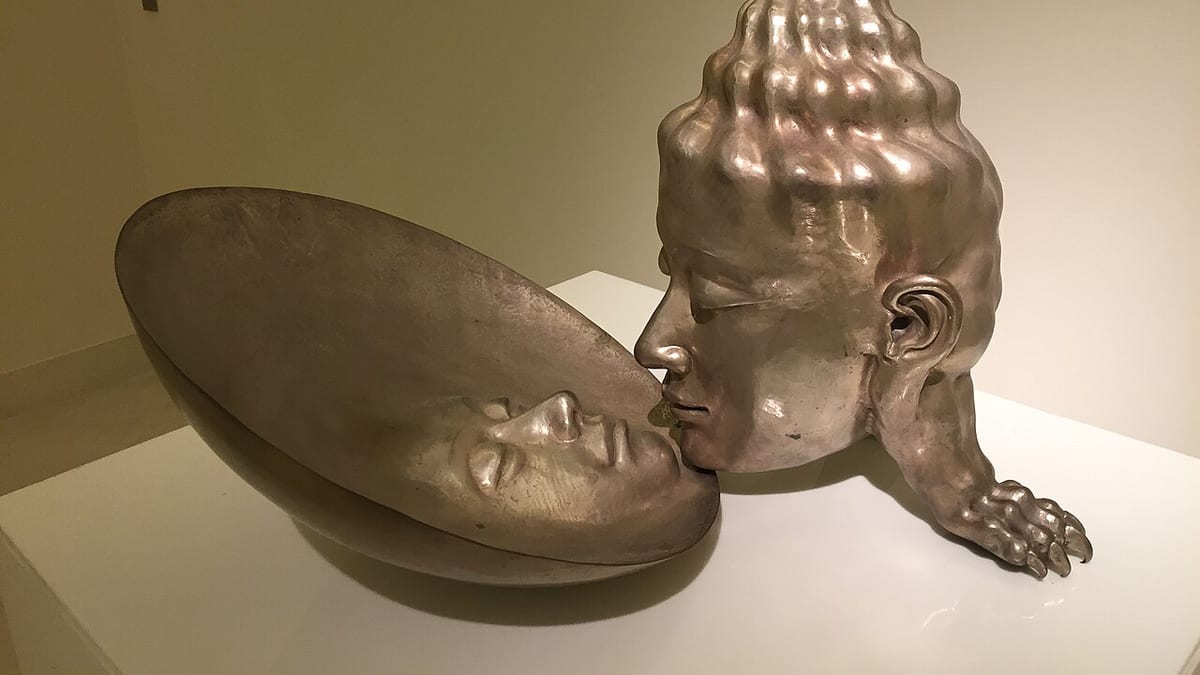
MOCA Bangkok is a private museum built around Boonchai Bencharongkul's collection. Its permanent exhibition combines Thai and international work, with an emphasis on Thai artistic identity and the relationship between local traditions and outside influences. This is a particular collector's and institution's perspective, not an exhaustive survey of everything happening in Thai art. [1]
That distinction helps set expectations. "Contemporary" does not mean every room will contain experimental technology or an interactive installation. Someone hoping to see painting, symbolism and ambitious visual storytelling is more likely to find the visit rewarding than someone expecting an immersive entertainment attraction.
The museum's floor guide gives useful priorities. The third floor emphasises imagination and fantasy, including work by Prateep Kochabua and Sompong Adulyasaraphan. The fourth includes Thawan Duchanee and the large collaborative work The Three Kingdoms: Heaven, Middle Earth, and Hell. International works occupy the fifth floor, including the Richard Green room. [1]
Rather than treating that as a checklist, choose two areas that genuinely interest you and leave time to return to a work that puzzled you. Large paintings can attract a quick photograph while repaying much slower looking. Start with the overall composition, then identify where your attention moves and which details change the scene's meaning.
You do not need to arrive with a vocabulary of Thai artistic movements. A useful approach is to compare two works that handle the same subject differently. Notice what is represented directly, what is symbolic, and what remains ambiguous after reading the label. The aim is understanding, not completing every room at the same speed.
The ticket discrepancy - and a realistic budget
As checked on 28 October 2026, the museum's dedicated admission page lists THB 400 for adults and THB 120 for students with valid identification. It lists free entry for children under 13, seniors aged 60 with identification, people with disabilities and priests. General admission excludes special exhibitions and the auditorium. [2]
The official FAQ still quotes THB 300 for adults. Because the operator's own pages disagree, budget THB 400 and confirm the final amount through its linked booking system or ticket office. Treat the lower figure as unresolved website information, not a guaranteed discount. [3]
For two full-paying adults, the calculated admission budget is therefore THB 800 before travel and refreshments. A student should carry the actual qualifying identification; a discounted category visible online does not eliminate the need to establish eligibility.
The more important value question is often the outing's total cost. Add the return journey and any special exhibition you specifically intend to see. Compare that complete figure with the alternative you would otherwise choose, not with a misleadingly cheap admission price copied from an older article.
For someone deeply interested in the art, transport is part of reaching the experience. For a visitor with only a short gap before dinner, the same journey may feel disproportionate. Neither judgement requires declaring the museum universally essential or universally skippable.
Plan the northern Bangkok journey properly
The main museum is at 499 Kamphaeng Phet 6 Road, Chatuchak. Its official directions include the SRT Red Line to Bang Khen station, Exit 2, followed by a walk. The admission page suggests transferring from MRT Bang Sue through Krung Thep Aphiwat to the Red Line. [2][3]
Do not confuse a station named in a route with the museum being directly above that station. Include the interchange and final walk in your plan. On a wet afternoon, a route with predictable rail travel may still involve an uncomfortable last segment; a taxi may be preferable for that part without becoming the best choice for the entire journey.
The operator's pages give different estimates for the walk from Bang Khen. Use the mapped entrance rather than building a tight schedule around either estimate. For passengers with mobility restrictions, ask about the complete station-to-door route and the museum's access arrangements before committing.
A taxi is simpler when several people are travelling together or when the starting point makes rail transfers awkward. Ask your accommodation to help identify the exact museum entrance if necessary, and keep the address saved for the return. No fixed taxi price is assumed here because origin, traffic and booking method change the calculation.
The museum also advertises Four Seasons Art Space by MOCA Bangkok. That name refers to a separate venue; it is not a substitute map pin for the main collection. Match the exhibition you want to its actual location before booking transport. [4]
How much of the day should you reserve?
Published opening hours are Tuesday–Sunday, 10am–6pm, with Monday closure. I recommend leaving roughly half a day available for the entire outing if you are travelling from elsewhere in Bangkok, while keeping the museum portion flexible. That is a planning allowance, not a measured travel or viewing time. [2]
A good visit need not consume the whole opening day. Begin with the floors that matter most to you, then decide whether you want to continue or pause. Arriving near closing removes that choice and can turn substantial galleries into a hurried sequence of doorways.
The FAQ confirms luggage storage at the front ticket office, free visitor parking and a ground-floor café with Wi-Fi. These facilities can make a visit easier, but anyone bringing oversized luggage should establish acceptance rather than assuming a storage mention covers every suitcase or valuable item. [3]
MOCA can look attractive as a stop around a Don Mueang flight because it is in the northern part of the city. I would only use it that way after allowing a separate, adequate airport arrival margin. Geographic proximity does not make a museum visit a protected flight connection, and storage does not solve a late departure from the galleries.
For families, choose a small number of paintings to discuss together and be willing to shorten the visit. Free admission for a child does not automatically make a long art itinerary enjoyable. Look at the institution's published collection images before deciding whether the subject matter suits your group.
Who should make it a priority?
Choose MOCA when Thai art is one of the reasons you came to Bangkok, or when you want to look beyond the city's best-known temple and shopping itineraries. It rewards a visit built around the work rather than one squeezed into leftover time.
Place it lower on the list when you have only a brief first stay, dislike substantial gallery visits, or would sacrifice the attraction you care about most simply to reach it. The sensible compromise is not a rushed circuit: it is choosing a different day, or accepting that this particular museum belongs on a future trip.
At the current published adult budget, the decision is ultimately about attention rather than collecting another attraction. Make the journey because you want to look, compare and learn - and give yourself enough time to do those things.