Suan Pakkad Palace is not currently a visit to book: its official website displays a repair-closure notice, without a reopening date. As checked on 28 October 2026, remove it from an immediate Bangkok itinerary. Keep it on your future shortlist if traditional Thai houses, archaeology and the history of collecting interest you. [1]
That distinction matters because older descriptions can make the museum sound like an easy, inexpensive stop between other attractions. A historical admission price or a familiar opening-hours table does not override a closure notice. The useful decision today is whether to explore its collection online and choose an alternative, rather than travel to the gate hoping that an old listing is correct.
Why it deserves a place on a future shortlist
This is a residential and collecting story, not the same kind of experience as a great ceremonial palace. The museum's own account describes the home of Prince Chumbhot and Princess Pantip on land previously used as a vegetable garden. The name Suan Pakkad preserves that association with a cabbage garden. [2]
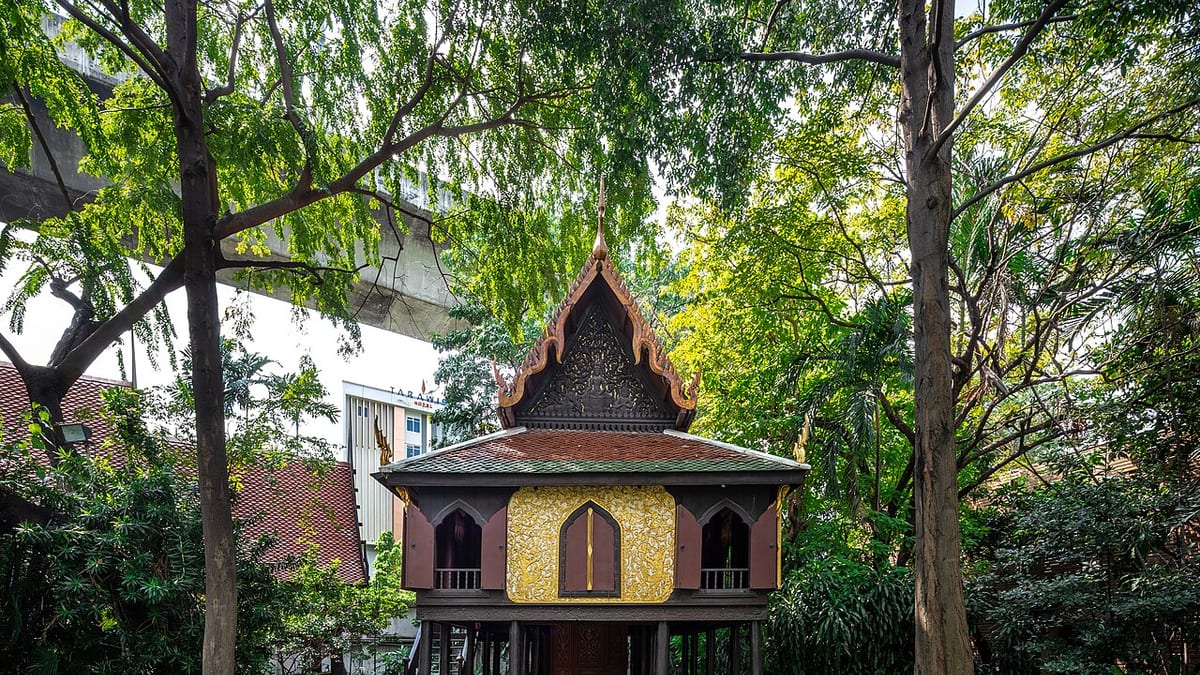
After the Second World War, four inherited traditional Thai houses were brought to the property and reassembled. More houses were subsequently added as the collection grew. The institution describes an ensemble of eight Thai houses, rather than a single palace building constructed all at once. [2]
That is the architectural reason to be interested. A future visit can be read as a study of buildings collected, moved, adapted and arranged around a home. It offers a different question from "Which monarch built this grand hall?" Ask instead how the ensemble was assembled and how domestic architecture became a setting for museum objects.
Someone interested only in monumental scale may find that less compelling. Someone who likes house museums may find it more revealing. The buildings and the collection explain one another; neither should be treated merely as a backdrop for the other.
The collections are broader than the word palace suggests
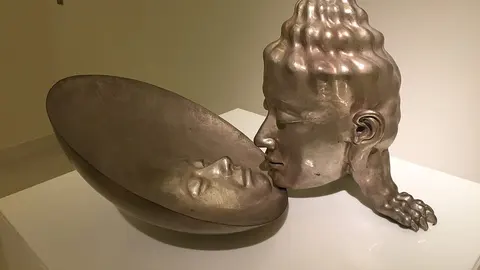
The institution's published collection overview ranges from prehistoric material to religious sculpture, ceramics, furnishings and other objects from later periods. Its history records the owners receiving visitors and sharing their collections, with the museum opening to the public in 1952. [3]
Do not expect a single, continuous narrative of one royal residence. This is a collector's museum, where the interesting connections may be between different materials, periods and regions. Decide whether that style of display appeals to you before giving it priority over a more tightly focused attraction.
Two parts deserve particular attention when browsing the museum's online interpretation: the Ban Chiang archaeological collection and the Lacquer Pavilion. The museum's own virtual tour highlights both, identifying the pavilion with late Ayutthaya or early Rattanakosin architecture. [4]
The archaeological material is important because it takes the visit far beyond the history of the house and its owners. The pavilion, meanwhile, shifts attention back to the building as an object of preservation. Together they explain why this is not simply an attractive garden with a few domestic possessions inside.
For a future physical visit, choose two or three interests rather than trying to absorb every object. An architecture-focused traveler could concentrate on the houses and pavilion. A visitor drawn to early history could make the archaeological collection the priority. That approach is more satisfying than treating every room as an identical stop on a circuit.
What the closure means for planning now
The official notice says the museum is closed for repairs. It does not provide a dated reopening commitment or a replacement programme. Accordingly, there is no defensible basis here for recommending a current visiting slot, selling a current admission price or assuming access to the garden while interiors are unavailable. [1]
A temporary closure should not be turned into a claim that the museum has closed permanently. Equally, the word temporary is not evidence that it will reopen before your holiday. Keep the distinction clear when saving places for a future trip.
Do not purchase a tour principally for this stop unless the operator confirms what is actually included during the closure. "Passing Suan Pakkad Palace" and "visiting the museum" are not equivalent. An exterior drive-by is unlikely to meet the expectations created by photographs of the collections.
Once reopening is officially announced, rebuild the practical part of the visit from the new information. Confirm which buildings are accessible, whether repairs affect circulation and whether admission arrangements have changed. Old reviews are still useful for understanding the collection, but not for settling post-repair operations.
Accessibility deserves the same fresh assessment. Raised traditional houses do not automatically provide a continuous step-free museum route. Ask about the specific galleries you want to see, not simply whether the property accepts visitors with mobility needs.
Explore the museum without making a wasted journey
Suan Pakkad Palace maintains an institutional presence on Google Arts & Culture, including a 360-degree tour and a collection-history exhibition. These are useful ways to see what interests you while the physical site is unavailable. They should be read as collection interpretation, not as evidence that the doors are open today. [2][4]
Start with the history of the houses, then move to the archaeological collection or pavilion. Looking at the architecture first makes the objects easier to place within the setting. It also helps you decide whether reopening would justify changing a later itinerary.
For families, this can become a short shared activity rather than a substitute hour of screen-based sightseeing. Choose one building and one object, then ask what each reveals about how the place became a museum. There is no need to work through every online image to benefit from the material.
A workable alternative: Jim Thompson House
For an immediate Bangkok visit centered on traditional houses and a collection, consider Jim Thompson House instead. Its current visitor information lists daily opening from 10am to 5pm, with the last guided tour at 5pm. Entry to the main house requires a museum guide; it is not an independently browsed interior. [5]
Published admission is THB 250 for adults, THB 150 for visitors aged 10–21 with identification, and free for children under ten. The operator identifies National Stadium BTS, Exit 1, as a practical approach. [5]
This is an alternative, not a replacement with identical collections. Choose it for the house-museum format rather than assuming it reproduces Suan Pakkad's archaeology. The guided format can suit visitors who prefer interpretation to investigating an eclectic collection alone.
There is also an important physical limitation: the operator states that the main-house route involves stairs and has no elevators. A traveler who cannot manage stairs should resolve that issue before going; recommending another traditional house does not solve an accessibility problem by itself. [5]
For now, that leaves a clear decision: do not spend an active sightseeing slot traveling to closed Suan Pakkad Palace. Use its online collection to assess a future visit, and choose an operating attraction that matches both your interests and your practical needs.