
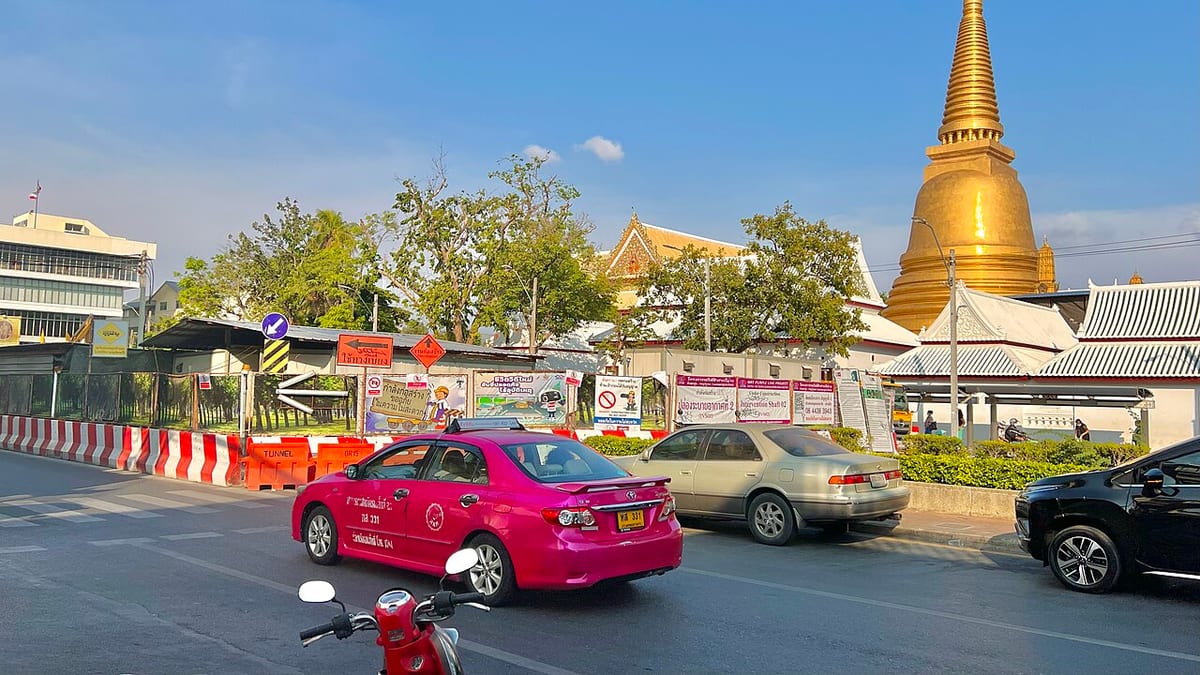
For a first Bangkok trip centred on walking and outdoor sights, start by comparing November to February. Choose March or April only with a realistic heat-management plan, and approach the wetter months with flexible sightseeing rather than an automatic cancellation. The best month is the one whose conditions fit your activities - not simply the one labelled "high season." 12
Thailand's official seasonal outline places the hot season around mid-February to mid-May, the rainy season around mid-May to mid-October, and the cooler season around mid-October to mid-February. These are broad climatic patterns, not fixed changeover dates or a forecast for your travel week. Bangkok should not be assigned the mountain temperatures or island rainfall pattern of another region. 1
January to March: build the trip around your tolerance for heat
January is a logical starting point for visitors who want temple visits, neighbourhood walks and time outside without deliberately choosing the hottest part of the year. Use the seasonal advantage for activities that are harder to rearrange indoors, but keep breaks in the day. "Cooler" is relative: pack for a tropical city, not a northern winter. 1
A useful January itinerary alternates an outdoor morning with a meal or museum visit, then returns outside later. That structure also gives you room to respond to the actual forecast. Do not fill every comfortable hour with a different district merely because the calendar looks favourable.
February sits near the transition towards the hot season in the official seasonal description. For a traveller with fixed school holidays, it can still be a sensible choice; the adjustment is to avoid building the whole visit around long midday walks. Compare the actual hotel and flight quotes rather than assuming one month is always cheaper. 1
For a special celebration or festival, use the organiser's dates for the year you are travelling. An annual event can shift within the calendar, and an old article's February itinerary is not proof that the same programme will occur on your dates.
March is a month to choose deliberately rather than accidentally. It lies in the hotter seasonal window. Put the most exposed activity early, allow a proper indoor interval, and avoid a hotel location that forces repeated long walks simply to reach transport. 1
A shorter, well-located stay may work better than a longer bargain stay with awkward daily journeys. That is an itinerary trade-off, not a claim that March is unsuitable for everyone. Travellers who enjoy indoor culture, restaurants and evening outings can organise a very different trip from someone planning all-day walking.
April and May: heat, festivities and a change of pattern
April combines the hot-season challenge with Songkran-related travel. Thailand's seasonal guidance identifies mid-April as a particularly hot period. The tourism authority's 2026 Bangkok programme also illustrates why the festival should be treated as a set of dated events, not an assumption that every street follows one schedule. Its Saneh Art programme ran in April 2026; those dates are historical, not an announcement for 2027. 13
Choose April because the celebrations or your travel circumstances justify it, then plan accordingly. Keep valuables protected during any water-play outing, separate that activity from a formal dinner reservation, and choose accommodation whose access suits the particular event. Someone wanting a quiet sightseeing break should assess event locations before booking beside them.
May is a transition month rather than a switch that flips neatly from dry to wet. The official rainy-season outline begins around mid-May, while also acknowledging variability in the arrival of seasonal conditions. Treat an itinerary for early May and one for late May as plans that may need different daily adjustments. 1
Book the main experiences you truly need, but leave the order of less constrained visits flexible. A weather-sensitive rooftop and an indoor exhibition need not be assigned permanently to consecutive days months in advance. Save the outdoor experience for the clearer opportunity within your stay.
June to August: make flexibility part of the booking
June falls within the rainy-season planning window. That does not justify predicting continuous rain on every day of a holiday. It does justify choosing a hotel with straightforward transport access and identifying an indoor alternative for the parts of the itinerary that depend on visibility or dry surfaces. 12
For a short visit, avoid putting every major outdoor activity on the final afternoon. Spread the opportunities across the stay. The point is to retain another chance, not to create an elaborate hourly weather strategy before reliable forecasts exist.
July calls for the same flexible approach, with particular attention to how activities connect. The official seasonal account describes renewed, more persistent rainfall as monsoon patterns shift during this part of the year. A journey that looks simple on a map can become inconvenient when it involves several exposed walks and separate vehicles. 1
Group nearby stops and leave recovery time between a day trip and a timed evening booking. Keep rain protection accessible rather than buried under luggage. These small decisions are often more valuable than trying to identify a supposedly guaranteed dry hour.
August can suit a trip whose priorities include food, shopping and indoor attractions, provided you do not treat those as consolation activities. Make them part of the original plan. For an outdoor-heavy trip, compare the consequences of disruption rather than judging the month only by a rainfall label. 2
For example, a traveller with three possible afternoons for one observation deck has more flexibility than someone arriving for a single sunset. The same seasonal conditions can therefore be manageable for one itinerary and a poor match for another.
September and October: leave room for wet-weather disruption
September deserves a particularly cautious approach to tightly timed outdoor plans. The Thai Meteorological Department's September 2026 report documented heavy rainfall and local flooding in Bangkok during a late-month episode. That is evidence of a specific past event - not a forecast that your September trip will repeat it, or that the flooding remains in place today. 4
The practical response is to protect essential journeys. Do not place a weather-sensitive outing immediately before a flight, and keep a route alternative for a day when local conditions change. Read the current warning rather than using a monthly average to decide whether a particular journey is sensible.
October is a transition period in the official seasonal description, with the central region potentially changing later than northern areas. Avoid interpreting "the rainy season ends in October" as a promise of dry weather from the first day of the month. 1
For a trip straddling October and November, flexible attraction dates can be more useful than moving the entire holiday by a few days. Let actual conditions determine which afternoon you use for a view or a river outing.
November and December: use the seasonal advantage wisely
November is a strong planning choice for visitors who can choose their dates and want a broad mix of outdoor experiences. It falls within the generally cooler seasonal window, but the exact week still matters. Keep the same sensible pacing you would use at other times rather than assuming the calendar removes the need for breaks. 1
Choose a specific attraction or event date before committing to a non-refundable package. Seasonal popularity does not tell you whether a particular performance, festival or special opening is available during your stay.
December also fits an outdoor-oriented itinerary. For travel around the end of the year, compare the full cost of accommodation, transport and any special dinner or celebration you actually intend to book. Do not assume a room booking includes access to a hotel's separate event. 1
For most first-time visitors with flexible dates, the decision is therefore straightforward: begin with the cooler seasonal window, then choose the week that fits the budget and programme. For fixed dates, change the daily rhythm and booking flexibility before deciding the trip cannot work. Climate helps choose a strategy; the short-range forecast helps choose tomorrow's plan.