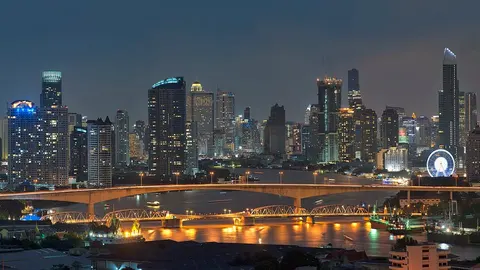
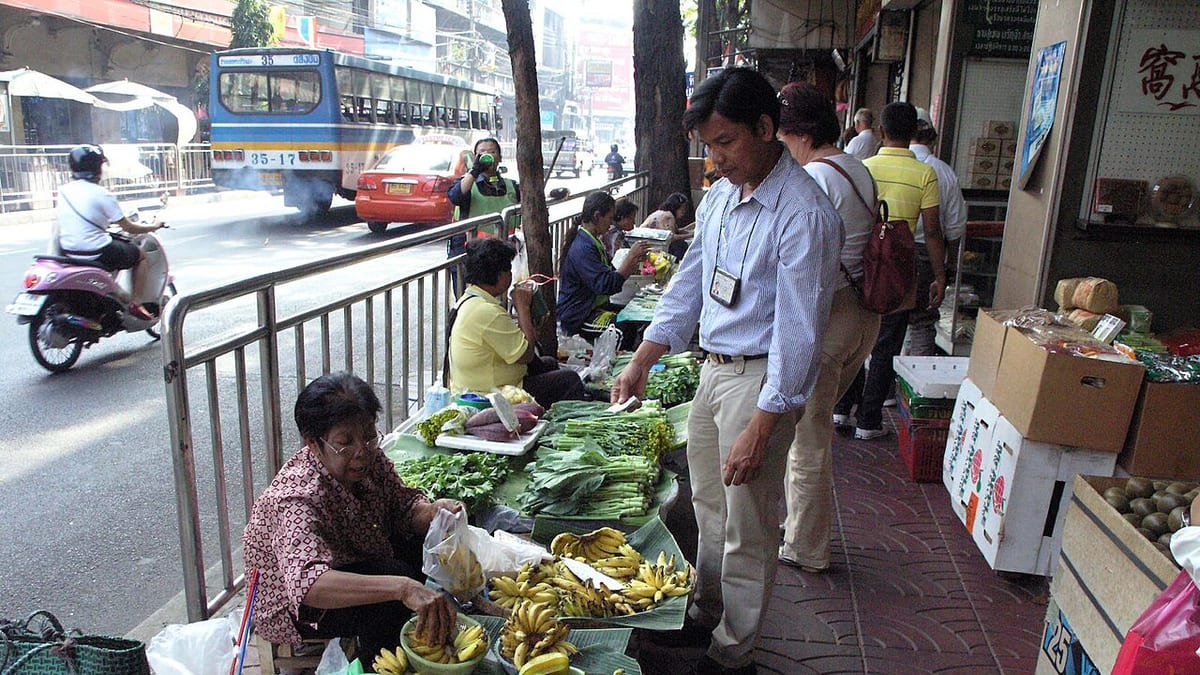
A Bangkok layover can support a city visit, but the airport matters as much as the number of hours. Stay at the airport with four hours, approach six cautiously, and consider one compact outing with eight or twelve. A change between Suvarnabhumi and Don Mueang is a transfer task first, not spare sightseeing time.
Start with BKK or DMK, not "Bangkok airport"
Read both airport codes on your ticket. Suvarnabhumi is BKK; Don Mueang is DMK. A connection that lands at one and departs from the other involves entering Thailand and travelling across the city, so it cannot be planned like an airside transfer within one terminal.
At Suvarnabhumi, the airport's transfer guide distinguishes international-to-international connections from international-to-domestic procedures. The latter involve immigration and the appropriate customs and transfer process; baggage arrangements depend on the flight and airline. Ask the carrier whether your bags and boarding passes are handled through to the final destination. [1]
At Don Mueang, do not automatically follow a BKK itinerary found online. The airport has different rail access: the SRT Red Line serves Don Mueang station and connects towards Krung Thep Aphiwat, rather than using Suvarnabhumi's Airport Rail Link. [2]
This sounds obvious until a booking engine displays a generous connection in the same city. Verify the airport, terminal, baggage arrangement and protection offered by your ticket before assigning any time to sightseeing.
Entry permission comes before a city plan
Leaving the international transfer area means entering Thailand. Whether you need a visa, qualify for an exemption or can use another entry arrangement depends on your passport and circumstances. The Thai embassy guidance on airside transit describes conditions including through-checked luggage, remaining in the transit area and a connection not exceeding twelve hours; it is not permission to enter the city. [3]
Eligible entry and the Thailand Digital Arrival Card are also different things. TDAC is free and is submitted within the specified three-day period before arrival, including the arrival date. Airside transit without passing immigration is exempt; entering Thailand for an outing is not. The arrival card does not replace a visa where one is required. [4][5]
Complete the required information before travel rather than treating airport Wi-Fi as the plan. Keep the onward itinerary and the details of your intended visit available. An officer's entry decision is not something a private sightseeing operator can guarantee.
What the four time windows really allow
These are editorial recommendations for an international arrival and departure at the same airport, not minimum connection times issued by an airline.
| Scheduled layover | Sensible default | What would change the decision |
|---|---|---|
| Four hours | Remain at the airport | A domestic itinerary has different formalities, but still needs its own calculation |
| Six hours | Prefer a meal, rest and an uncomplicated connection | Only a very short landside outing after prompt arrival processing |
| Eight hours | One district with a clear return route | Entry delays, baggage collection or an airport change may remove the opportunity |
| Twelve hours | A modest city visit with a meal and recovery time | Overnight timing, attraction hours and a separate-ticket recheck |
The arithmetic matters more than the labels. Suppose an eight-hour layover uses 90 minutes to reach public arrivals, another 90 minutes for both airport journeys and three hours for the return-airport buffer. That leaves two hours for the city. These are deliberately stated assumptions, not claims about average immigration queues or road speeds.
Recalculate once you are actually landside. A late arrival does not create a reason to cut the airport buffer; it removes an activity from the plan.
From Suvarnabhumi, choose a rail-linked outing
The Airport Rail Link connects BKK with Phaya Thai, where it meets the BTS network, and Makkasan, linked with MRT Phetchaburi. Government guidance describes the full rail journey as about thirty minutes, with fares of THB 15–45. That is train travel, not gate-to-city time: add the walk to the station, waiting, transfers and your final walk. [6]
Current government information places the normal service window at approximately 5:30am to midnight. It is therefore useful for a daytime visit but not a round-the-clock rescue plan after a late dinner. [7]
For eight hours, choose one area reached by a straightforward rail connection. A meal and a walk around Siam, or a compact outing near an MRT station, is a better starting point than a palace, a market, a river cruise and a rooftop reservation on the same connection. The recommendation is about limiting transfers, not claiming one neighbourhood is objectively the best part of Bangkok.
Keep your outward route reversible. Save the station name, the airport-bound direction and the final return time. Do not make the outward journey by train, wander far away, then discover the return now depends on an unfamiliar cross-city taxi ride.
With twelve daytime hours, you can give a chosen district more breathing room. Decide whether you want temples and the river, shopping and food, or simply a quiet lunch and a rest. Do not turn a short first encounter with Bangkok into a checklist of distant highlights.
Don Mueang and airport-change connections need different plans
For a same-airport Don Mueang connection, the Red Line is the starting point for a public-transport plan. Its government guide identifies the connection with the MRT and intercity rail at Krung Thep Aphiwat. Allow for reaching the station and any onward interchange; the time spent aboard a train is only part of the trip. [2]
If you must change between DMK and BKK, make the second airport the destination. The official Suvarnabhumi information describes a free inter-airport shuttle for eligible connecting passengers with onward flight documentation, not a general sightseeing bus. Confirm eligibility and the current departure point for your direction before relying on it. [8]
Road conditions can alter the calculation substantially. An October 2026 government notice said Don Mueang taxi services had resumed and advised passengers to ask staff about destinations affected by flooding. That notice does not establish that every route remains flooded; it shows why an old, fixed transfer-time estimate is insufficient for a particular travel day. [9]
On an airport-change itinerary, a comfortable meal at the departure airport is usually the better use of leftover time than an additional stop en route. It lets you absorb delays before they threaten the flight.
Overnight hours are not equivalent to sightseeing hours
A twelve-hour layover from late evening to morning is mostly a question of sleep and access, not how many attractions to visit. Before booking a room, distinguish an airside room you can reach without immigration from a landside hotel that requires entry permission and a return through departure formalities.
Also check the booking unit: a day-use block, a conventional overnight stay and a lounge admission may cover different hours. A cheap room is not good value if its check-in time starts after your next flight.
For any outing, keep the next flight visible in the plan. Set the return alarm before you leave, maintain a working phone and have a backup payment method. Bangkok is worth visiting when the connection genuinely supports it; staying at the airport is the right decision when it does not.
Sources
- Airports of Thailand: Suvarnabhumi transfer procedure
- Thailand government: Red Line guide
- Royal Thai Embassy London: transit conditions
- Thai Immigration: TDAC frequently asked questions
- Royal Thai Embassy Abu Dhabi: TDAC introduction and scope
- Thailand government: Airport Rail Link
- Government Public Relations: Airport Rail Link service notice
- Airports of Thailand: transport and connecting-passenger shuttle information
- Thailand government: Don Mueang taxi service notice, 1 October 2026