
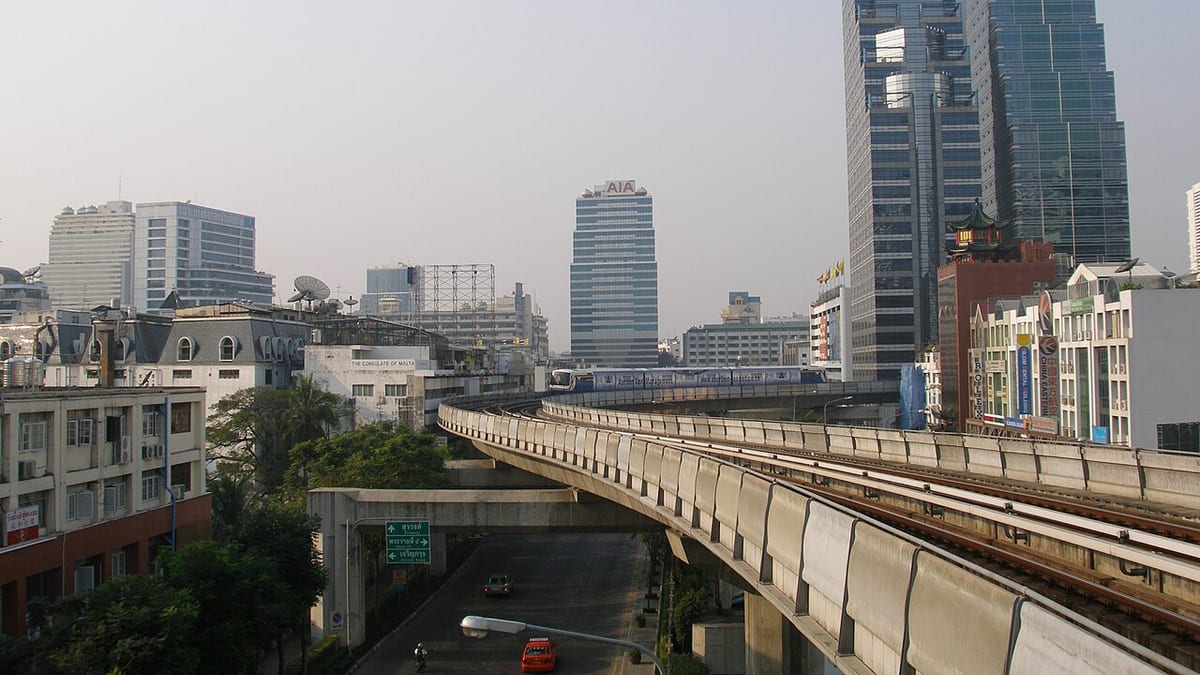
The Bangkok BTS one-day pass is worthwhile when your planned eligible BTS fares exceed its THB 150 price, or when you value unlimited qualifying journeys enough to pay a small convenience premium. It is not a 24-hour citywide transport pass. Decide from a real route plan, not from a rule that every sightseeing day needs one. 12
What you are buying
The published one-day pass costs THB 150 and is associated with the BTS Sukhumvit and Silom lines. BTS's conditions describe unlimited travel for the valid day, while its issuing information directs buyers to BTS ticket offices. This is a specific rail product, not a bundle of Bangkok attractions or transport networks. 132
Its validity is tied to the applicable calendar day, not a rolling 24-hour period from the first tap. A pass used late in the evening should not be expected to cover the following afternoon. That distinction is easy to miss if you are used to European or Japanese tickets explicitly sold by the hour. 12
Do not include MRT, Airport Rail Link, boat or road journeys when calculating the value of a BTS-only pass. A journey-planning app may display all of them as convenient connections, but visual continuity on a map is not fare integration.
Similarly, the fact that a service is operated by a related company or accepts Rabbit does not establish that it accepts this one-day product. For a trip involving an outer extension or a different line, show the exact itinerary at the counter before buying rather than interpreting "BTS" as unlimited coverage of everything overhead.
Calculate the value using trips you would actually make
Add the ordinary fares for your planned eligible journeys. Compare the result with THB 150, excluding any travel that would remain separately payable. That is the useful break-even calculation; the number of rides alone is not enough because fares can differ.
The following are illustrative calculations, not quoted fares for named routes:
| Planned eligible journeys | Pay-as-you-go total | Compared with a THB 150 pass |
|---|---|---|
| Four journeys averaging THB 30 | THB 120 | Ordinary fares cost THB 30 less |
| Four journeys averaging THB 40 | THB 160 | Pass saves THB 10 |
| Five journeys averaging THB 35 | THB 175 | Pass saves THB 25 |
The example shows why "three rides" or "four rides" is not a universal answer. Your actual stations determine the comparison. Use the current fare shown by BTS for those stations rather than substituting the cheapest fare you have seen advertised.
Do not add journeys solely to make the pass look worthwhile. Walking between two nearby stops, staying longer at an exhibition or having dinner near the hotel can produce a better day than repeatedly boarding trains to recover a sunk cost.
The convenience premium is a personal choice. If ordinary fares would total slightly less, you may still prefer a pass to avoid repeated purchases. Describe that honestly as paying for simplicity, not as a financial saving.
A day that fits - and one that does not
A BTS-focused day can involve several separate trips between your accommodation, the Siam area, another neighbourhood for lunch and a different evening destination. It becomes a stronger candidate when those journeys are genuinely useful and all fall within the product's coverage.
Bangkok Art and Culture Centre offers a concrete example of a BTS-accessible stop: its third-floor entrance connects with National Stadium station. However, visiting it does not automatically justify a separate train journey from every nearby shopping destination. Look at the walking route before counting another fare in your calculation. 4
A day dominated by the old city and river is a different proposition. If your main transport spending is on MRT journeys, cross-river ferries or a sightseeing boat, a BTS pass may cover little more than leaving and returning to your hotel. You can spend a full day sightseeing without taking enough eligible BTS journeys to justify it.
An arrival day is another weak default. The Airport Rail Link is a separate service, and a late arrival leaves fewer hours to use a calendar-day pass. Calculate the onward BTS travel you will really make that evening rather than buying a pass as part of a general "airport setup." 52
For a mixed day, a regular ticket or existing Rabbit balance may be simpler. The right product follows the itinerary; it should not dictate the itinerary after purchase.
Buying, validating and using it correctly
Buy at a BTS ticket office and confirm the intended travel date and any route-specific question before payment. For a group, each traveller needs the appropriate individual ticket. A pass is not a group payment instrument that one person can tap several times in succession. 32
Follow the current BTS gate instructions: use the designated reader at both entry and exit and retain your pass. Do not assume an old photograph of a magnetic-ticket slot describes the product being issued today. 6
Keep the pass separate from other contactless cards when presenting it. This reduces the chance of the reader interacting with a different credential. Store it somewhere accessible enough that you can use the same ticket consistently throughout the day.
If it fails at a gate, speak to the staff and keep the pass involved. Buying a replacement ticket immediately can obscure the original problem and create another expense. Explain the station where you entered and the journey you intended to make.
A pass also does not remove the operator's normal travel rules. It is a way to pay for eligible journeys, not permission to remain inside the paid area indefinitely or ignore instructions during a service change. 2
Pass or Rabbit: compare the right costs
For someone who already owns a valid Rabbit card, compare the pass with the fares that would be deducted from existing stored value. Do not add a new-card fee to that comparison when no new card is being purchased.
For someone buying Rabbit for the first time, BTS currently lists a THB 120 issuing fee separately from loaded credit. That makes a one-day pass potentially simpler for a single intensive day, but Rabbit may be useful over a longer stay. The two products solve different problems. 7
Also separate money loaded from money spent. Adding THB 300 to a stored-value card does not mean that the day's journeys cost THB 300 if some balance remains. Compare actual fares, card-acquisition costs where relevant and whatever value you realistically expect to use later.
My recommendation is to decide each morning from the journeys you intend to take. Buy the pass for a genuinely BTS-heavy day, use ordinary fares for a lighter or mixed-network day, and avoid turning a modest transport saving into the organising principle of your holiday.